The Capital Museum
Introduction
The Capital Museum is a renowned cultural institution dedicated to showcasing the rich history and heritage of Beijing. Established as a palace of Beijing culture, the museum highlights the city's extensive historical development, including its 500,000 years of human activity, 3,000 years of urban history, and 800 years as the capital of China. The museum serves as a hub for cultural and artistic exhibitions, presenting artifacts and artworks from various regions and periods. It is a significant destination for both locals and tourists interested in exploring the historical and artistic legacy of Beijing.
History
The planning for the Capital Museum began in 1953, but it officially opened to the public on October 1, 1981. Initially located at the Confucius Temple of Beijing, the museum underwent a major transformation as part of Beijing's 10th Five-Year Plan. In 2001, it relocated to its current site on the extended Chang'an Avenue in the western part of the city. The construction of the new museum was a landmark cultural project, and the modern facility was inaugurated on May 18, 2006. Since then, the Capital Museum has become a prominent institution dedicated to preserving and showcasing Beijing's historical and cultural heritage.
Collections
The Capital Museum boasts an impressive collection of 83,000 cultural relics, many of which were unearthed in the Beijing area. Among these, 305 pieces are classified as first-grade treasures. The museum's core permanent exhibitions focus on the local history of Beijing, divided into six sections: ancient settlements, the Yan State's historical remains, the city's development as a northern center, its role as the capital during the Liao and Jin dynasties, the Yuan Dynasty's capital Dadu, and the political center during the Ming and Qing dynasties.
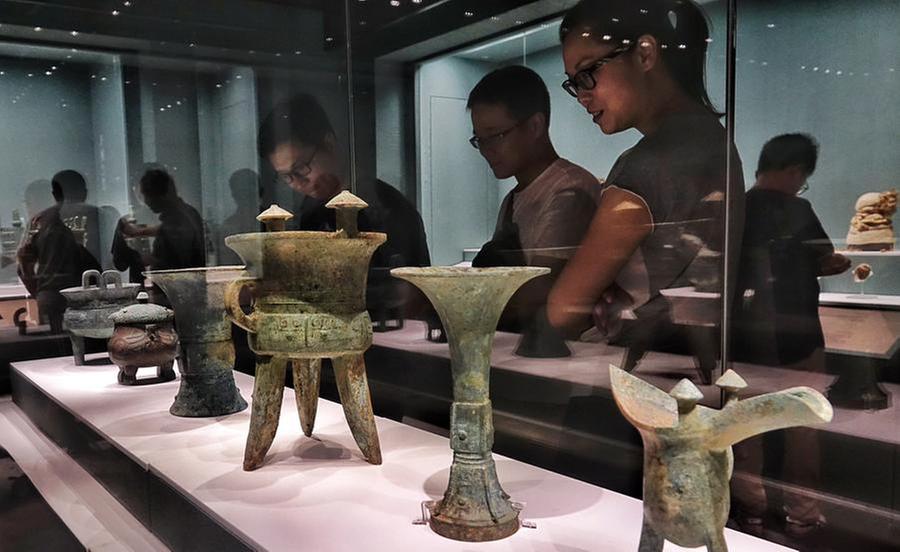
Other exhibitions feature ceramics, calligraphy, painting, Buddhist art, jade, and bronze artifacts from the ancient State of Yan. Notable items include a Shang Dynasty bronze wine vessel adorned with three rams, a Western Zhou bronze tripod, a Tang Dynasty bronze ox, and various other artifacts spanning different dynasties. Highlights include an earthenware teapot from the Spring and Autumn Period, a gilded Buddha inlaid with turquoise from the Yuan Dynasty, and a Qing Dynasty folding fan with an ivory handle inlaid with precious stones and a miniature watch.
The museum also hosts temporary exhibitions, such as the cloisonné enamel exhibition showcasing traditional, contemporary, and creative handicrafts, and an exhibition on Chinese archaeological achievements featuring 360 sets of cultural relics spanning 5,000 years of history.
Visitor Information
Location and Accessibility
The Capital Museum is situated at 16 Fuxingmenwai Street, Xicheng District, Beijing. Its central location makes it easily accessible via public transportation and private vehicles. Visitors can find detailed information on accessibility and directions on the museum's official websites: http://en.capitalmuseum.org.cn (English).
Opening Hours
The museum operates from 9:00 AM to 5:00 PM on Tuesday, Wednesday, Thursday, Friday, and Sunday, with the last admission at 4:00 PM. On Saturdays, it extends its hours from 9:00 AM to 8:00 PM, with the last admission at 7:00 PM. The museum is closed on Mondays, except for national holidays. Visitors are encouraged to check the official website for any updates or changes to the schedule.
Admission Fees
General admission to the Capital Museum is free, but visitors are required to present their passports for entry. Tickets can be booked online through the museum's official website at http://www.capitalmuseum.org.cn.








